
Automated Pressure Test Validation & Real Time Report Generation Saves Time & Money While Preventing Errors.
Trusted handyman services
Confirm your test is leak-free and code compliant before bleeding down.
What is TestOp?
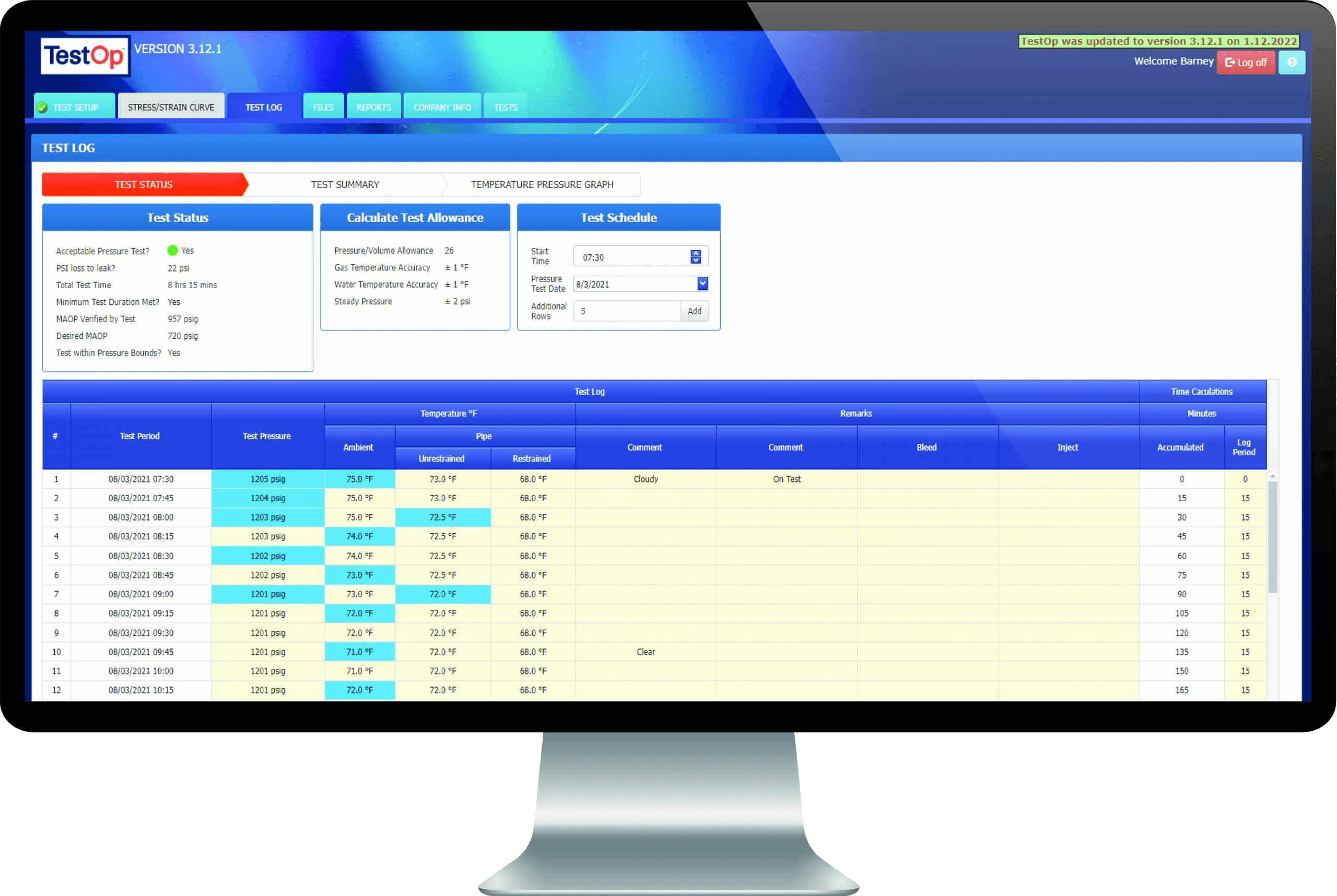
TestOp® is the industry-leading application for Pipeline Pressure Test Validation in the field. The TestOp application uses engineering mass balance analysis to monitor real-time pressure test data, detecting possible leaks through sophisticated quantitative analysis that other methods can’t detect. Once the test passes, one-click is all it takes to generate comprehensive pressure test reports, complete with charts and calculations, ensuring compliance per US federal regulations (49 CFR 192 & 195). The final paperwork and test documentation package is done in seconds – while still in the field. No further analysis is required.
TestOp can be used to certify both hydrostatic tests and pneumatic tests. TestOp users can also upload and validate previous pressure test data with ease, providing one centralized data repository for both recent and older tests.
Code Compliance
TestOp satisfies code requirements for:
- 49 CFR 192 Subpart J gas lines
- 49 CFR 195 Subpart E hazardous liquid lines
- ASME B31.3 Process Piping

Proven Accuracy
- 6,000 validated tests and counting.
- Trusted by gas and liquid operators of all sizes since 2011.
- Thanks to TestOp, our clients have been able to identify leaks which were missed by other pressure test validation models.

Online / Offline Modes
- Enter live pressure test data for real-time validation or upload historical data from a past test.
- No cell signal? No problem. TestOp has the ability to capture data offline and analyze whether the test was acceptable once service is restored.

Remote Access
- TestOp is entirely web-based. No special software installation is needed.
- Access the world’s best pressure test certification software at the office, home, or in the field. Remotely monitor pressure tests from any location.
Multiple Test Mediums & Objectives
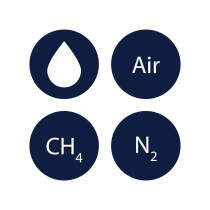
- Test Mediums: water (hydro test), nitrogen, air, or gas.
- Test Objectives: new construction, pre-testing, repairs & replacements, MAOP/MOP establishment or reconfirmation, integrity assessments, class location changes, spike testing, etc.
Record Retention for All Project Documents
- Upload test charts, site photos, pipe drawings, etc. to TestOp and include them as part of the test report.
- All pressure test data are maintained in our secure cloud database. Reports can also be downloaded for your own records.

Traceable, Verifiable, and Complete Reports
- Generate comprehensive TVC pressure test reports for record-keeping or in preparation for a PHMSA/internal audit.
- Report layout is consistent no matter who performs the test. Report contents include RCP’s certification letter, calculations, charts, uploaded documents, and more.
What our clients say:
RCP has been very responsive when issues arise or questions come up on the TestOp software, as well as on hydrotests in general. Their software has evolved a lot over the years and is very helpful in identifying issues in tests that may otherwise have been swept under the rug. The software’s ability to detect slow leaks that still stay within test pressure range, yielding older pipe, or discrepancies in length on acquired lines has been extremely helpful.
TestOp has become a valuable tool for our company across both our Engineering & Construction and Operations departments by providing us with uniform reports that make documenting hydrostatic tests easier. This software has allowed us to receive feedback in real time, giving our company the confidence to accept a successful test, knowing the program aided in test data analysis. Additionally, RCP’s technical expertise in hydrostatic testing has become a useful resource to our business when troubleshooting testing failures, proving themselves to be customer driven through their commitment to assisting our team with quick answers to determine a correct path forward.
We have utilized TestOp when providing services to our clients over the last 6 years. TestOp transforms the pressure test documentation process from paper to digital with the added security of 3rd party verification. Remote data viewing, real time evaluation and analysis, combined with cost savings, set TestOp apart from any competitors. For us, a testing contractor, TestOp is unmatched within the industry. We recommend this product to all of our clients.
[TestOp] is very helpful in identifying issues in tests that may otherwise have been swept under the rug. The software’s ability to detect slow leaks that still stay within test pressure range, yielding older pipe, or discrepancies in length on acquired lines has been extremely helpful.
Calling the wrong result can be costly.
Avoid damages and lost revenues.
Pressure tests are costly, but not as costly as erroneously passing or failing them.
If an operator passes a bad pressure test, the ignored leak(s) might grow over time and result in a pipeline rupture that causes significant health, property, and environmental damages. Fines and payments for damages can easily exceed the cost of a pressure test by orders of magnitude (e.g. San Bruno incident).
If an operator incorrectly fails a good pressure test, it will cost them additional money to have the pipeline retested, not to mention loss of revenue due to the pipeline being out of commission.